Mental Health

Mental Health in the Modern Age

Mental health has emerged as one of the defining public health challenges of our time. Rates of anxiety, depression, and suicide have risen across developed nations, particularly among young people. The reasons are complex—social media, economic precarity, political polarization, isolation, decreasing resilience—but the reality is undeniable: we are struggling collectively with our inner lives.

Mental Health in the Modern Age

Mental Health

Depression is more than sadness. It is persistent low mood, loss of interest in activities once enjoyed, changes in appetite and sleep, fatigue, difficulty concentrating, feelings of worthlessness, and sometimes thoughts of death. It affects cognition, emotion, and physical sensation. It is not weakness or character flaw but medical condition with biological, psychological, and social components.

Anxiety disorders are the most common mental health conditions. Generalized anxiety involves persistent, excessive worry about multiple domains. Panic disorder features sudden episodes of intense fear accompanied by physical symptoms. Social anxiety involves fear of judgment in social situations. Phobias focus on specific objects or situations. All involve disproportionate fear response that interferes with function.

The gut-brain connection is increasingly recognized. The enteric nervous system, sometimes called the “second brain,” communicates bidirectionally with the central nervous system. Gut microbiome composition affects neurotransmitter production, inflammation, and stress response. Diet influences mental health through this connection, explaining why nutrition matters for mood.

Sleep and mental health are intimately connected. Sleep disruption is both symptom and cause of mental health problems. Improving sleep often improves mood, anxiety, and emotional regulation. Conversely, treating depression or anxiety often improves sleep. The relationship is bidirectional, meaning interventions targeting either can help both.

Exercise treats mental health effectively. The evidence is strong enough that some health systems now prescribe exercise for mild to moderate depression. The mechanisms include endorphin release, neurotransmitter regulation, reduced inflammation, improved self-efficacy, and social connection when done with others. Moving is medicine for mind as well as body.

Social connection is protective. Humans evolved in tribes; isolation is生理 stressor. Loneliness predicts depression, anxiety, and early death as strongly as smoking or obesity. Yet modern life increasingly isolates us, replacing genuine connection with digital simulation. Rebuilding community is mental health intervention.

Therapy works. Cognitive-behavioral therapy helps identify and change unhelpful thought patterns and behaviors. Other approaches—psychodynamic, humanistic, acceptance-based—help different people. Finding right therapist and approach matters. Therapy is not sign of weakness but skill-building for emotional life.

Medication helps many. Antidepressants, anti-anxiety medications, and other psychotropics are tools, not solutions. They reduce symptoms enough that therapy and lifestyle changes can work. For some, they are temporary; for others, long-term. Decision to use medication is personal, between patient and provider.

Stigma remains barrier. Despite progress, many still view mental health conditions as moral failing rather than medical conditions. This prevents people from seeking help, disclosing struggles, and accessing treatment. Normalizing mental health conversations is essential public health work.

Prevention matters as much as treatment. Building resilience, coping skills, and social connections before crisis occurs reduces likelihood of disorder. Teaching children emotional literacy, stress management, and help-seeking behavior is investment in lifelong mental health.

The role of technology is double-edged. Mental health apps provide accessible support. Online therapy reaches those without local providers. But social media correlates with increased anxiety and depression, particularly among young women. The relationship is complex, but constant comparison, cyberbullying, and displacement of real connection contribute.

Crisis resources exist. Suicide hotlines (988 in US), crisis text lines, and emergency services provide immediate help for those in acute distress. Knowing these resources and using them when needed can save lives. No one should suffer alone.

Mental health in modern age requires individual and collective response. Individuals can prioritize sleep, movement, connection, and professional help when needed. Communities can reduce stigma, build support systems, and advocate for accessible care. Society can address root causes: inequality, isolation, and meaninglessness that fuel despair. Mental health is not luxury but foundation.


How Democracy Works

How Democracy Works

Democracy, from Greek demos (people) and kratos (rule), means government by the people. In practice, modern democracies are representative: citizens elect officials to make decisions on their behalf. Understanding how this system functions—its institutions, processes, and principles—is essential for meaningful participation.

How Democracy Works

How Democracy Works

Core principles distinguish democracy from other systems. Popular sovereignty means ultimate authority rests with people. Political equality means each citizen’s voice carries equal weight. Majority rule with minority rights means decisions follow majority will while protecting fundamental rights of all. These principles require ongoing defense; democracies can erode from within.

Elections are democracy’s central mechanism. Regular, free, and fair elections allow citizens to choose representatives and hold them accountable. Secret ballots protect voters from coercion. Independent election administration ensures integrity. Universal suffrage means all adult citizens can vote, though historical exclusion of women, minorities, and non-property owners shows this principle was not always honored.

Separation of powers prevents concentration of authority. Typically divided among executive (enforces laws), legislative (makes laws), and judicial (interprets laws) branches, each checks the others. This system, designed to prevent tyranny, creates deliberate friction requiring compromise. Different democracies structure this separation differently; presidential systems like US differ from parliamentary systems like UK.

Legislatures represent diverse constituencies. Members debate, amend, and vote on legislation. Committees conduct detailed examination of proposals. Representation can be geographic (districts) or proportional (based on vote share). Each system has tradeoffs: geographic representation connects constituents to specific representatives; proportional representation ensures broader political diversity.

Executive power varies. Presidents, directly elected, serve fixed terms with significant independence. Prime ministers, chosen by legislature, depend on parliamentary confidence. Each model has strengths: presidential systems provide stability; parliamentary systems respond more flexibly to changing political configurations. Many democracies blend elements.

Judiciaries interpret laws and constitutions. Independent judges, insulated from political pressure, ensure decisions follow legal principles rather than popular sentiment. Judicial review allows courts to strike down laws violating constitutional principles. This counter-majoritarian power protects rights but can conflict with democratic will.

Rule of law means everyone, including government officials, must follow publicly disclosed laws enforced through established procedures. No one is above law. Predictable legal systems enable commerce, protect rights, and constrain arbitrary power. When rule of law weakens, democracy follows.

Civil liberties protect individual expression and association. Freedom of speech, press, assembly, and religion enable citizens to organize, criticize government, and advocate change. These rights are not absolute but essential. Independent media informs public and holds power accountable. Without these freedoms, elections become meaningless.

Political parties organize competition for power. They aggregate interests, recruit candidates, develop policy platforms, and mobilize voters. Party systems vary from two-party dominance to multipolar competition. While often criticized, parties are essential for structuring democratic choice. Their weakness often signals democratic distress.

Civil society includes organizations outside government—unions, advocacy groups, religious institutions, community organizations—that represent interests and enable collective action. Strong civil society checks government power and builds social capital. Its vitality correlates with democratic health.

Constitutions establish fundamental rules. They allocate powers, protect rights, and set amendment procedures. Written or unwritten, constitutions represent founding agreements about how political community will govern itself. Constitutional endurance requires both stability and adaptability; too rigid prevents necessary change; too flexible undermines predictability.

Challenges threaten contemporary democracies. Disinformation erodes shared factual basis for debate. Polarization prevents compromise. Economic inequality translates into political inequality. Foreign interference exploits divisions. Democratic backsliding occurs when elected leaders gradually undermine institutions. Recognizing these threats is first step toward defending democracy.

Citizenship in democracy requires engagement. Voting is minimal obligation. Beyond voting, staying informed, participating in community, holding officials accountable, and respecting opposing views sustain democratic culture. Democracy is not spectator sport; it requires active, informed citizens who understand both its principles and its fragility.

The Laptop: The Ultimate Productivity Tool

The Laptop, The Ultimate Productivity Tool

Despite predictions of its demise, the laptop remains the essential tool for knowledge work, creativity, and productivity. Tablets and smartphones handle consumption admirably, but when serious work needs doing—writing, coding, designing, analyzing—the laptop is the device of choice. Its enduring relevance stems from a combination of factors no other form factor has matched: a physical keyboard, a large screen, powerful components, and true portability.

The Laptop: The Ultimate Productivity Tool

The Laptop: The Ultimate Productivity Tool

The laptop’s evolution has been remarkable. Early models were heavy, slow, and short-lived on battery. Today’s premium ultrabooks are lighter than a stack of magazines, more powerful than desktop workstations from a decade ago, and capable of all-day battery life. The convergence of solid-state storage, energy-efficient processors, and high-resolution displays has created machines that are genuinely pleasant to use anywhere.

The keyboard remains the laptop’s defining feature. For anyone who writes, codes, or works extensively with text, a physical keyboard with tactile feedback is vastly superior to touchscreen typing. Manufacturers have experimented with key mechanisms, travel distances, and layouts, seeking the perfect balance of comfort and thinness. The best laptop keyboards disappear into the background, becoming transparent extensions of thought.

The screen has transformed from functional to phenomenal. High-resolution Retina and 4K displays make text crisp and images vivid. OLED panels offer perfect blacks and infinite contrast. High refresh rates make scrolling and animation buttery smooth. For creative professionals, color accuracy and gamut coverage match dedicated monitors. The laptop’s screen is no longer a compromise but a feature.

Performance continues to advance. Apple’s transition to custom silicon with the M-series chips demonstrated that laptops could be simultaneously faster and more power-efficient than ever. AMD’s Ryzen processors and Intel’s latest generations similarly push performance boundaries. For most users, the laptop is now powerful enough to handle any task, from video editing to software development to data analysis.

Port selection reflects ongoing tension between thinness and utility. The move to USB-C and Thunderbolt consolidates charging, data, and display connectivity into a single, reversible port. But the loss of dedicated HDMI, SD card slots, and USB-A ports frustrates users who must carry dongles. The ideal balance remains elusive, with different manufacturers making different tradeoffs.

Build quality varies enormously. Premium laptops use aluminum unibody construction, precision hinges, and glass trackpads. Budget models compromise with plastic, flex, and imprecise components. The difference in daily experience is substantial. A well-built laptop becomes a trusted tool; a poorly built one becomes a constant frustration.

Operating system choice shapes the experience. Windows offers maximum software compatibility and hardware variety. macOS provides deep integration with Apple’s ecosystem and superior creative software optimization. ChromeOS prioritizes simplicity, security, and cloud integration. Linux serves developers and privacy advocates. Each has strengths; the best choice depends entirely on user needs and preferences.

The trackpad has evolved into a sophisticated input device. Apple’s Force Touch trackpads use haptic feedback to simulate clicks without moving parts. Precision drivers on Windows laptops have closed the gap significantly. Gestures for switching apps, spaces, and desktops have become intuitive and efficient.

Battery life improvements liberate users from power outlets. All-day battery life is now standard in premium models. Some ultra-efficient machines, particularly those with ARM-based processors, can last multiple days on a charge. This mobility transforms where and how work happens.

The laptop’s future involves further refinement rather than revolution. Foldable screens may eventually offer tablet-like portability with laptop-sized displays. ARM architecture may displace x86 in more models. Repairability and sustainability are becoming purchase factors for environmentally conscious consumers. But the core concept—a powerful, portable computer with a physical keyboard—will endure.

The laptop remains the ultimate productivity tool because it imposes no artificial limits. It asks nothing of you except what you bring to it. In an age of increasingly specialized devices, its generality is its greatest strength.

The Periodic Table of Elements

The Periodic Table of Elements

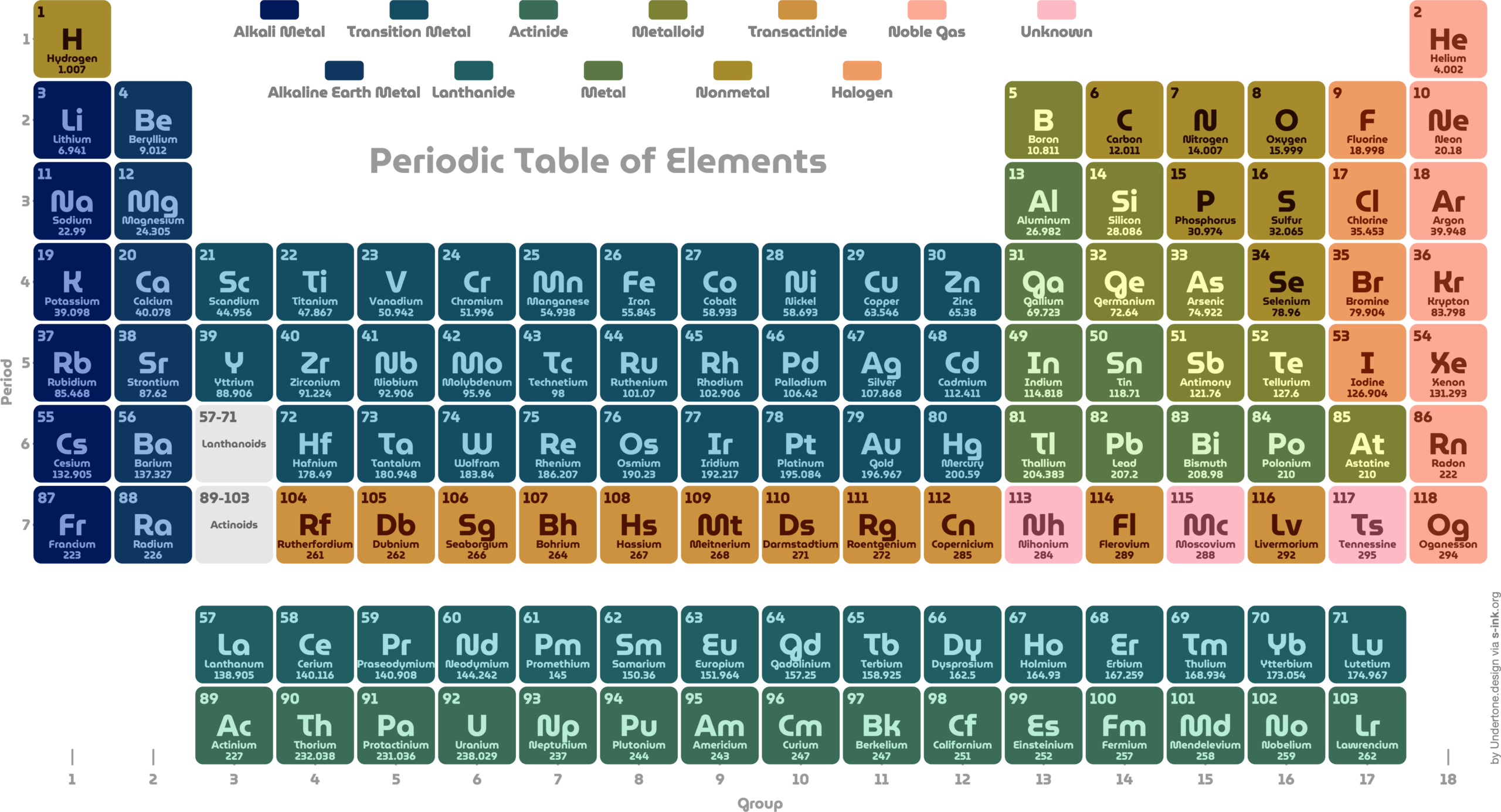
The periodic table is one of science’s most elegant and useful tools, organizing all known chemical elements according to their properties and revealing patterns that predict behavior. Its development represents one of chemistry’s greatest achievements, transforming element collection from mere list into meaningful framework.

The Periodic Table of Elements

The Periodic Table of Elements

Dmitri Mendeleev published first recognizable periodic table in 1869. Arranging elements by atomic weight, he noticed properties repeated periodically. Crucially, he left gaps for undiscovered elements and predicted their properties with remarkable accuracy. When gallium, scandium, and germanium were discovered matching predictions, his table gained acceptance.

Modern table arranges elements by atomic number (protons), not atomic weight. This resolved inconsistencies in Mendeleev’s arrangement. Henry Moseley established this through X-ray experiments in 1913, providing physical basis for periodic law. Today’s table contains 118 confirmed elements, with more possibly synthesized.

Rows are periods. Elements in same period have same number of electron shells. As you move left to right across period, atomic number increases, atomic radius generally decreases due to increasing nuclear charge pulling electrons tighter. Properties change systematically across periods.

Columns are groups or families. Elements in same group have same number of valence electrons (outermost electrons), giving them similar chemical properties. Group 1 (alkali metals) are highly reactive, losing one electron easily. Group 18 (noble gases) are nearly inert, having full valence shells.

Metals dominate left side and center. They conduct electricity, are malleable and ductile, and tend to lose electrons forming positive ions. Most elements are metals. Their properties make them essential for construction, electronics, and countless applications. Iron, copper, aluminum, gold exemplify metals.

Nonmetals occupy upper right. They are poor conductors, often gases or brittle solids, and tend to gain electrons forming negative ions. Carbon, oxygen, nitrogen are essential for life. Halogens (group 17) are highly reactive nonmetals. Their properties differ dramatically from metals.

Metalloids form diagonal boundary between metals and nonmetals. Silicon, germanium, arsenic have intermediate properties, behaving as semiconductors—conducting electricity under some conditions but not others. This property makes them essential for computer chips and electronics.

Transition metals occupy central block. They have variable oxidation states, form colored compounds, and often serve as catalysts. Iron in hemoglobin carries oxygen. Cobalt in vitamin B12 is essential. Platinum catalyzes reactions. Their electron configurations enable unique properties.

Lanthanides and actinides sit below main table. These inner transition metals have similar properties within each series. Lanthanides used in magnets, lasers, and phosphors. Actinides are radioactive; uranium and plutonium fuel nuclear reactions. Their placement reflects electron filling patterns.

Periodic trends reveal predictable patterns. Atomic radius decreases left to right, increases top to bottom. Ionization energy (energy to remove electron) increases left to right, decreases top to bottom. Electronegativity (attraction for bonding electrons) follows similar pattern. These trends enable property prediction.

Elements with atomic numbers above 92 (uranium) are synthetic, created in laboratories through nuclear reactions. They are unstable, decaying rapidly. Their discovery extends periodic table and explores nuclear stability. Island of stability theory predicts relatively stable superheavy elements may exist.

Isotopes of same element have different neutron numbers. Some isotopes are stable; others radioactive. Carbon-14 dating, uranium-lead dating, and medical isotopes all exploit radioactive decay. Isotopic composition varies naturally and can provide information about origin and age.

Element names reflect history. Some named for mythological figures (thorium for Thor), places (germanium for Germany, americium for America), scientists (curium for Curies), or properties (chlorine from Greek chloros meaning green). Each name carries story of discovery and cultural context.

Periodic table’s power lies in prediction. Unknown element properties can be inferred from neighbors. Chemical behavior follows position. This organizational principle enables chemists to understand reactions, design materials, and explore matter’s fundamental nature.

The periodic table adorns classrooms worldwide because it works. It organizes chemical knowledge, reveals deep patterns, and connects macroscopic properties to atomic structure. In elegant rows and columns, it captures order underlying apparent diversity of material world.

Blockchain

Blockchain Beyond Cryptocurrency: The Trust Machine

When most people hear “blockchain,” they think of Bitcoin, cryptocurrency, and speculative trading. But blockchain technology is far more than the foundation for digital money. It represents a fundamental innovation in how trust is established and maintained in distributed systems, with potential applications reaching into nearly every sector of the economy and society.

Blockchain Beyond Cryptocurrency: The Trust Machine

Blockchain

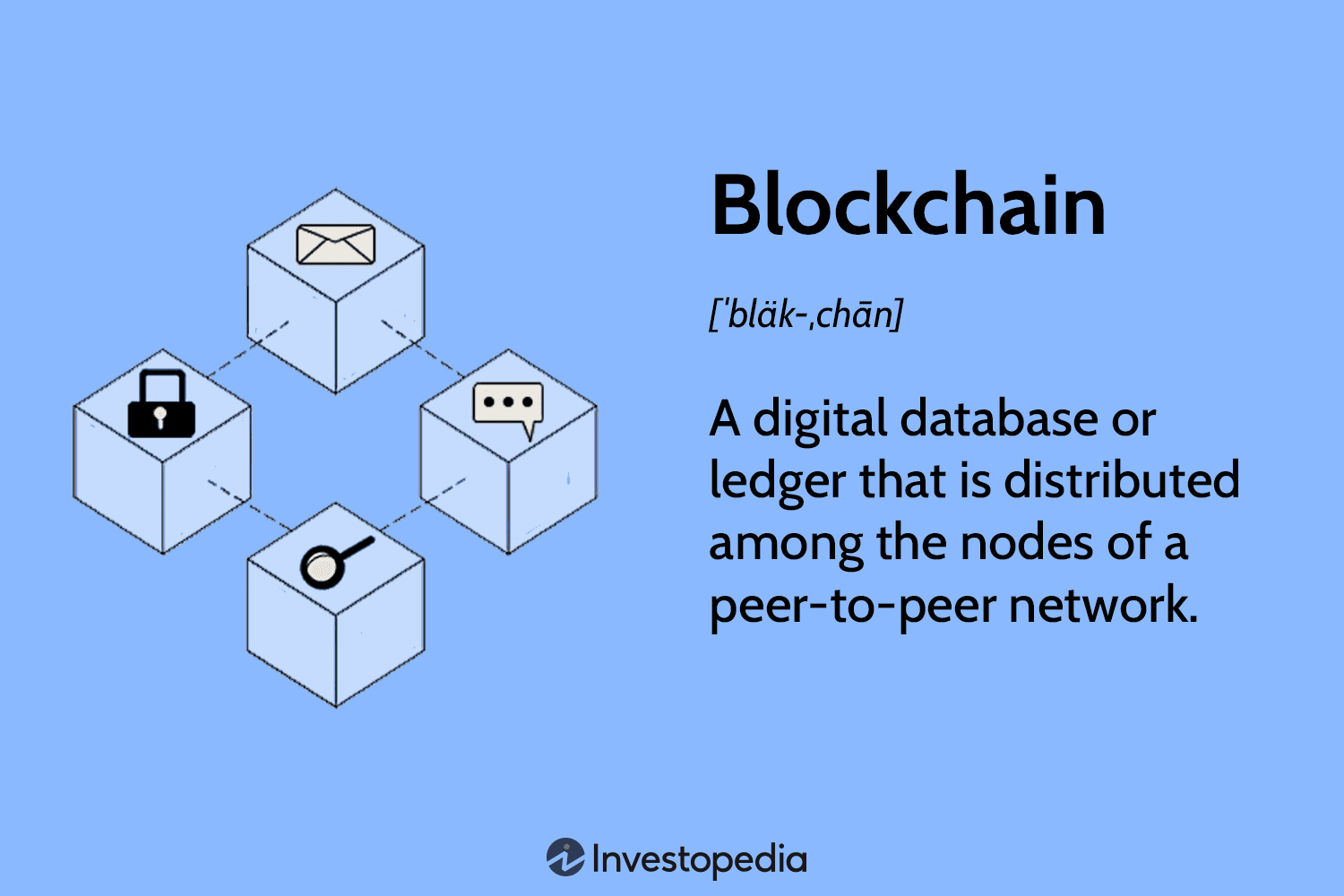
At its core, a blockchain is a distributed, immutable ledger. Transactions are grouped into “blocks” and cryptographically linked to form a “chain.” The ledger is maintained not by a central authority but by a network of participants who collectively validate new entries through consensus mechanisms. Once recorded, data cannot be altered retroactively without controlling a majority of the network’s computational power, which becomes increasingly impractical as the network grows. This creates a system where trust is established through mathematics and cryptography rather than through intermediaries.

The implications extend far beyond finance. In supply chains, blockchain can provide end-to-end visibility and authenticity verification. A consumer could scan a QR code and trace a product from raw material through manufacturing, shipping, and retail, verifying that claims about organic ingredients, fair labor, or sustainable sourcing are genuine. Counterfeit goods become harder to pass off as authentic when every transfer is recorded immutably.

In healthcare, blockchain could give patients control over their medical records while enabling secure sharing with providers. Individuals could grant temporary access to specific data for a particular consultation, with every access logged transparently. Research could access aggregated, anonymized data across populations with patient consent, accelerating medical discovery while preserving privacy.

In voting, blockchain offers potential for secure, verifiable elections. A voter could confirm that their vote was recorded correctly without revealing whom they voted for. Tampering would be detectable because any alteration would break the cryptographic chain. While technical and logistical challenges remain, the promise of election integrity without centralized vulnerability is compelling.

In intellectual property and creative industries, blockchain enables new models of ownership and compensation. Artists can mint non-fungible tokens (NFTs) representing unique digital works, with smart contracts automatically directing royalties to creators whenever works are resold. Musicians can distribute directly to fans, with every stream tracked and compensated transparently.

In identity management, blockchain could give individuals self-sovereign identity, controlling their personal data rather than surrendering it to platforms. A digital credential proving age or citizenship could be presented without revealing unnecessary personal information, enhancing privacy while enabling verification.

Yet challenges abound. Scalability remains problematic; early blockchains process far fewer transactions per second than centralized systems. Energy consumption, particularly for proof-of-work consensus, has drawn justified criticism, though newer proof-of-stake systems dramatically reduce energy use. Regulatory uncertainty creates hesitation among potential adopters. User experience remains complex, limiting mainstream adoption.

The hype cycle has undoubtedly inflated expectations, but beneath the speculation lies genuine innovation. Blockchain is not a solution for every problem, but for situations requiring trust among untrusted parties, transparency without central authority, or verifiable provenance, it offers something genuinely new. As the technology matures and practical applications emerge, the “trust machine” may yet transform how we coordinate, transact, and collaborate.