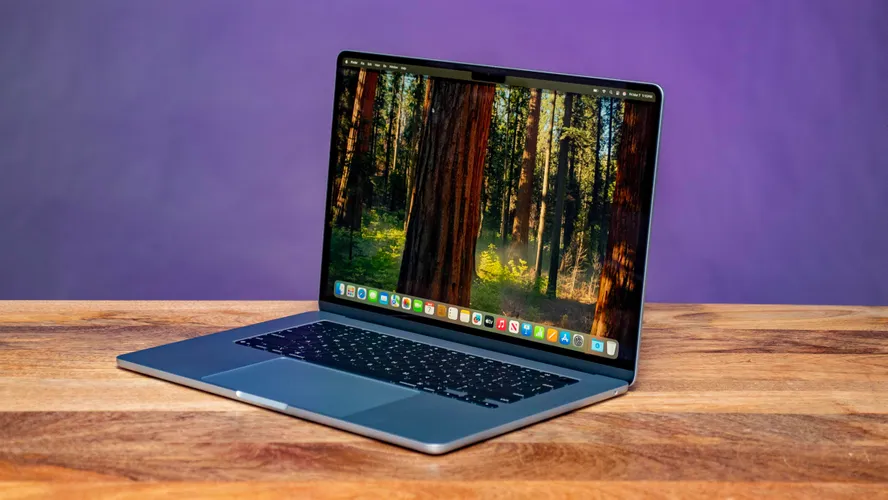
Despite predictions of its demise, the laptop remains the essential tool for knowledge work, creativity, and productivity. Tablets and smartphones handle consumption admirably, but when serious work needs doing—writing, coding, designing, analyzing—the laptop is the device of choice. Its enduring relevance stems from a combination of factors no other form factor has matched: a physical keyboard, a large screen, powerful components, and true portability.
The Laptop: The Ultimate Productivity Tool
The laptop’s evolution has been remarkable. Early models were heavy, slow, and short-lived on battery. Today’s premium ultrabooks are lighter than a stack of magazines, more powerful than desktop workstations from a decade ago, and capable of all-day battery life. The convergence of solid-state storage, energy-efficient processors, and high-resolution displays has created machines that are genuinely pleasant to use anywhere.
The keyboard remains the laptop’s defining feature. For anyone who writes, codes, or works extensively with text, a physical keyboard with tactile feedback is vastly superior to touchscreen typing. Manufacturers have experimented with key mechanisms, travel distances, and layouts, seeking the perfect balance of comfort and thinness. The best laptop keyboards disappear into the background, becoming transparent extensions of thought.
The screen has transformed from functional to phenomenal. High-resolution Retina and 4K displays make text crisp and images vivid. OLED panels offer perfect blacks and infinite contrast. High refresh rates make scrolling and animation buttery smooth. For creative professionals, color accuracy and gamut coverage match dedicated monitors. The laptop’s screen is no longer a compromise but a feature.
Performance continues to advance. Apple’s transition to custom silicon with the M-series chips demonstrated that laptops could be simultaneously faster and more power-efficient than ever. AMD’s Ryzen processors and Intel’s latest generations similarly push performance boundaries. For most users, the laptop is now powerful enough to handle any task, from video editing to software development to data analysis.
Port selection reflects ongoing tension between thinness and utility. The move to USB-C and Thunderbolt consolidates charging, data, and display connectivity into a single, reversible port. But the loss of dedicated HDMI, SD card slots, and USB-A ports frustrates users who must carry dongles. The ideal balance remains elusive, with different manufacturers making different tradeoffs.
Build quality varies enormously. Premium laptops use aluminum unibody construction, precision hinges, and glass trackpads. Budget models compromise with plastic, flex, and imprecise components. The difference in daily experience is substantial. A well-built laptop becomes a trusted tool; a poorly built one becomes a constant frustration.
Operating system choice shapes the experience. Windows offers maximum software compatibility and hardware variety. macOS provides deep integration with Apple’s ecosystem and superior creative software optimization. ChromeOS prioritizes simplicity, security, and cloud integration. Linux serves developers and privacy advocates. Each has strengths; the best choice depends entirely on user needs and preferences.
The trackpad has evolved into a sophisticated input device. Apple’s Force Touch trackpads use haptic feedback to simulate clicks without moving parts. Precision drivers on Windows laptops have closed the gap significantly. Gestures for switching apps, spaces, and desktops have become intuitive and efficient.
Battery life improvements liberate users from power outlets. All-day battery life is now standard in premium models. Some ultra-efficient machines, particularly those with ARM-based processors, can last multiple days on a charge. This mobility transforms where and how work happens.
The laptop’s future involves further refinement rather than revolution. Foldable screens may eventually offer tablet-like portability with laptop-sized displays. ARM architecture may displace x86 in more models. Repairability and sustainability are becoming purchase factors for environmentally conscious consumers. But the core concept—a powerful, portable computer with a physical keyboard—will endure.
The laptop remains the ultimate productivity tool because it imposes no artificial limits. It asks nothing of you except what you bring to it. In an age of increasingly specialized devices, its generality is its greatest strength.
